A blockage on an angiogram is not, by itself, a reason to place a stent. The decision depends on whether the narrowing is causing reduced blood flow, how severe the symptoms and heart injury are, the urgency of the condition, and whether medicines, angioplasty or bypass surgery offers the safer and more effective option.
Key takeaways
- STEMI with reduced heart blood flow requires rapid primary angioplasty.
- Doctors confirm significant narrowing with symptoms, stress tests, or pressure measurements.
- Medicines and lifestyle treatment often come before planned angioplasty.
- Compare stents, bypass surgery, and medical treatment with your heart team.
When does a blocked artery require emergency angioplasty?
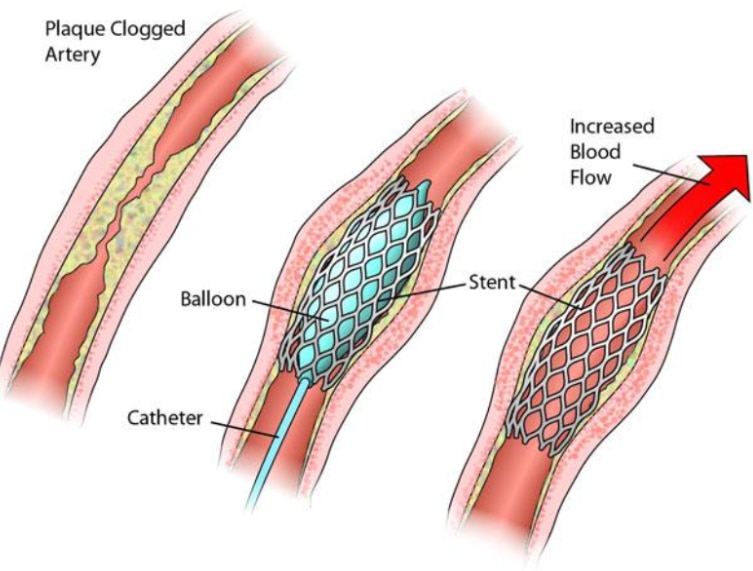
Emergency angioplasty is considered when a sudden loss of blood flow threatens heart muscle, not simply because an angiogram shows a narrowing. In STEMI, an ECG shows acute ST-segment elevation and the patient needs rapid reperfusion. Primary PCI opens the culprit artery with a balloon and usually a stent.
If timely PCI cannot be delivered, often within about 120 minutes of diagnosis, doctors may consider fibrinolysis when suitable and not contraindicated.
Doctors distinguish an emergency from a planned procedure in this order:
- Check for ongoing or recurrent chest pain, breathlessness, sweating, faintness, or circulatory instability.
- Review the ECG for STEMI or other high-risk ischaemic changes.
- Measure cardiac troponin. A rise or fall supports myocardial injury and can indicate NSTEMI, while unstable angina presents with ischaemic symptoms without a troponin rise.
- Perform urgent coronary angiography when the clinical picture indicates a high-risk acute coronary syndrome; treat the culprit lesion if PCI is appropriate.
Stable angina follows a different path. Doctors usually try medicines and risk-factor treatment first, then consider planned PCI when symptoms remain lifestyle-limiting and the narrowing clearly restricts blood flow. A visible blockage alone is not enough: opening a non-ischaemic lesion adds procedural risk without reliably improving symptoms or outcomes.
How do doctors tell whether a narrowing is truly significant?
A significant coronary artery narrowing is judged by its effect on heart muscle, not by its appearance alone. Chest pressure with exertion, breathlessness, ECG changes, troponin elevation, stress-test evidence of ischaemia and reduced movement of a heart-wall segment on echocardiography each add different information.
1. Doctors match symptoms with the pattern and urgency. Troponin supports heart-muscle injury, while an ECG can show an active heart attack or evidence of reduced blood flow. A raised troponin does not automatically identify one narrowing as the cause or mean that a stent is required.
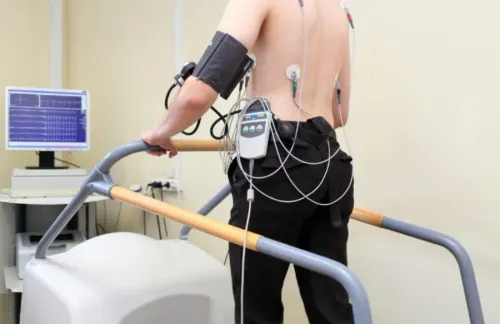
2. Stress testing shows whether exertion produces ischaemia and echocardiography shows its consequence, such as reduced movement in part of the ventricle. These findings help determine whether symptoms are likely to come from a particular coronary artery.
3. A coronary angiogram maps the number, location and visual severity of narrowings. The percentage estimated on angiography does not reliably show how much blood flow the lesion restricts, especially when the narrowing looks intermediate.
4. During angiography, doctors can measure pressure across an uncertain lesion. An FFR of 0.80 or less or an iFR of 0.89 or less commonly supports a flow-limiting lesion; higher values often support deferring angioplasty when symptoms and other tests agree.
The decision combines the whole picture. Treating a visible narrowing that causes no ischaemia may add procedural risk without improving symptoms or outcomes.
When are medicines and lifestyle treatment tried before angioplasty?
Stable coronary artery disease is often treated first with medical treatment because an angiogram’s “blockage” does not automatically cause ischaemia or require a stent. High-intensity lipid lowering, blood-pressure and diabetes control, smoking cessation, regular activity, and anti-anginal medicines address both symptoms and the disease driving plaque formation.
1. Start or optimise the prescribed plan, including an antiplatelet drug when indicated, a statin or other lipid-lowering treatment, and medicines for blood pressure, diabetes or angina. Do not stop these drugs because a future angioplasty is being discussed.
2. Track whether chest pain still occurs during walking, climbing stairs, work or sex. Persistent angina that restricts ordinary activities matters more than the word “narrowing” on an angiogram.
3. Reassess symptoms and test results after treatment has had time to work. If the narrowing is uncertain, fractional flow reserve or instantaneous wave-free ratio can show whether it reduces blood flow enough to explain the symptoms.
4. Consider PCI when lifestyle-limiting angina continues despite tolerated medicines and risk-factor control, and testing supports a flow-limiting lesion with anatomy suitable for stenting. PCI commonly improves symptoms and reduces anti-anginal medicines, but routine PCI does not usually extend survival over effective medical treatment when no high-risk anatomical indication exists.
A heart team may recommend a different revascularisation strategy when anatomy carries greater risk or is unsuitable for straightforward PCI. Your symptom burden, test results, coronary anatomy, treatment risks and preferences should guide the decision.
How do doctors choose between angioplasty, bypass surgery and medical treatment?
Doctors match the artery pattern with your symptoms, test results and overall risk rather than treating every angiogram narrowing. The number, length, location and complexity of lesions matter: a short, accessible narrowing differs greatly from diffuse disease, a bifurcation lesion or a chronic total occlusion.
| Option | What doctors weigh | When it fits |
|---|---|---|
| Medical treatment | Whether symptoms are controlled and the narrowing causes ischaemia; also blood pressure, cholesterol, diabetes and smoking | Stable disease without lifestyle-limiting angina or a high-risk anatomical indication |
| Angioplasty (PCI) | A focal, reachable lesion, likelihood of complete treatment, kidney function and procedural risk | Persistent angina despite medicines, demonstrated ischaemia, or selected urgent conditions |
| CABG | Number and complexity of vessels, graftable targets, ventricular function, surgical risk and recovery burden | Complex multivessel coronary disease, significant left-main disease, or diabetes with multivessel disease when PCI would give an incomplete result |
Angioplasty vs CABG is not decided by blockage percentage alone. Diabetes, reduced ventricular function, kidney disease, frailty and previous procedures can shift the balance, while your preference matters after the heart team explains durability, complications and recovery.
A chronic total occlusion is not automatically a reason for PCI; doctors consider it when symptoms or proven ischaemia persist and an experienced operator expects worthwhile benefit.
The Heart Clinic - Dr. Satyajeet - 08048066834 can help organise the angiogram, functional findings and risk factors so you can discuss the treatment choice with your cardiology team.
Related services
Coronary Angioplasty A coronary angioplasty is a procedure used to widen blocked or narrowed coronary arteries (the main blood vessels supplying the heart). View service → |
Angioplasty and Stent placement Angioplasty and Stent placement Angioplasty and stent placement are common procedures to open arteries in the heart that are clogged. View service → |
What should you weigh before and after a stent?
Before consent, weigh the expected symptom and blood-flow benefit against angioplasty risks: bleeding at the access site, artery damage, contrast-related kidney injury, heart attack, stroke, abnormal rhythm, emergency surgery and, rarely, death. A chronic total occlusion needs particular discussion because the procedure can require specialised equipment and experienced operators.
- Ask which stent fits the lesion. A drug-eluting stent is widely used because it releases medicine that lowers restenosis—the artery narrowing again inside the stent—compared with a bare-metal stent. Balloon-only treatment is less common because the artery can recoil or become injured.
- Confirm the antiplatelet plan. Dual antiplatelet therapy usually combines aspirin with a P2Y12 inhibitor for a period based on the reason for PCI, bleeding risk, stent and lesion features, and planned procedures. Never stop either drug without speaking to the treating cardiology team; early interruption can cause stent thrombosis.
- Ask what follow-up is needed. New or worsening chest pain, breathlessness or fainting needs urgent assessment, while recurrent exertional symptoms can signal restenosis or disease elsewhere.
A successful stent does not cure atherosclerosis. Continue prescribed lipid lowering, stop smoking, control blood pressure and diabetes, exercise safely, and attend cardiac rehabilitation. These measures reduce future coronary events and help preserve the benefit of PCI.
Frequently asked questions
When does a blocked artery require emergency angioplasty?
Emergency angioplasty is considered when a sudden loss of blood flow threatens heart muscle, especially during STEMI shown by ST-segment elevation on an ECG. Primary PCI restores flow through the culprit artery with a balloon and usually a stent.
How do doctors tell whether a narrowing is truly significant?
Doctors combine symptoms, ECG findings, stress-test results, angiography, and measurements such as fractional flow reserve or instantaneous wave-free ratio to determine whether a narrowing restricts blood flow.
When are medicines and lifestyle treatment tried before angioplasty?
For stable coronary artery disease without an immediate threat to heart muscle, doctors often begin with medicines, blood-pressure and cholesterol control, smoking cessation, exercise, and dietary changes before considering planned angioplasty.
How do doctors choose between angioplasty, bypass surgery and medical treatment?
The decision depends on urgency, the number and location of narrowed arteries, diabetes, heart function, symptoms, anatomy, surgical risk, and whether complete revascularisation is more likely with stents or bypass surgery.
What should you weigh before and after a stent?
Discuss bleeding risk, kidney function, contrast exposure, restenosis, stent thrombosis, dual antiplatelet treatment, medication adherence, recovery time, and the possibility that a stent will not relieve symptoms caused by another condition.