A single blood-pressure reading cannot show what happens while you work, sleep, exercise or wait for your next medication dose. By the end, you will know how a 24-hour monitor records readings, how to wear it correctly, and how clinicians use its patterns to judge blood pressure outside the clinic.
Key takeaways
- Keep the cuff on during normal daytime activities and sleep.
- Record symptoms, exercise, sleep and medication times in the diary.
- Compare daytime, nighttime and 24-hour averages—not one isolated reading.
- Ask how the results affect diagnosis, monitoring or treatment decisions.
What the monitor records during a 24-hour test
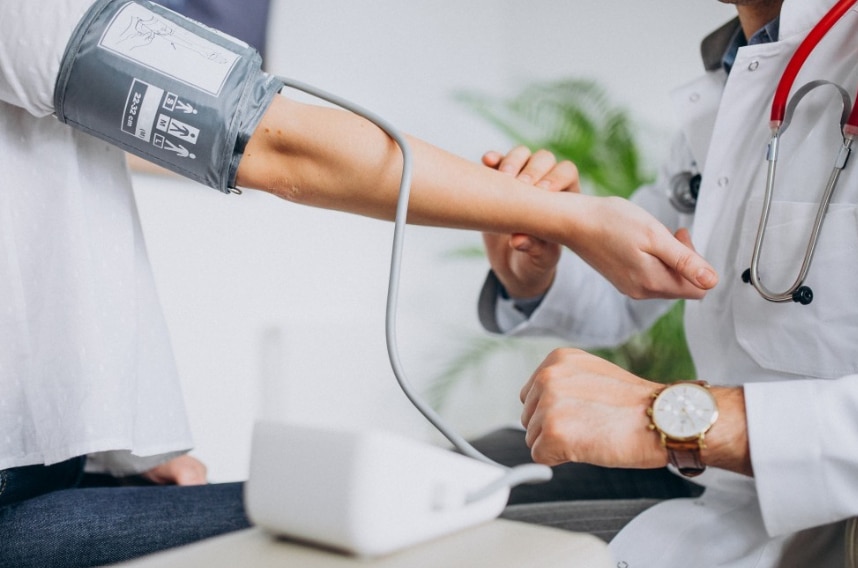
Ambulatory blood-pressure monitoring (ABPM) uses a portable blood-pressure monitor connected to an upper-arm cuff. A clinician selects the correct cuff size, places it over bare skin, and positions the tubing as instructed. The device is programmed to inflate automatically, commonly every 15–30 minutes while you are awake and every 30–60 minutes during sleep.
It records each successful reading with its time, including systolic and diastolic pressure and usually pulse rate.
Keep the arm relaxed and still while the cuff inflates. Record events that could help explain unusual readings:
- The time you go to sleep and wake up
- Medication doses
- Exercise or unusual physical effort
- Symptoms, stress, pain or illness
- Any failed inflation, loose cuff or disconnected tubing
The monitor does not measure continuously; it collects a series of separate readings across roughly 24 hours. One unusually high or low result is less informative than the pattern across waking and sleeping periods. Keep the cuff attached for the full recording, then return for removal the next day.
A technically useful report needs enough successful measurements in both periods. Common quality targets include at least 70% of planned readings, with about 20 valid daytime readings and seven valid nighttime readings. If too many readings fail, repeating ABPM often provides more reliable information than interpreting a sparse record.
How to work, sleep and move while wearing ABPM
You can work, walk, travel, drive, eat, use a computer and sleep while wearing ABPM. Keep your usual routine, but protect the cuff and pause for each inflation. Hold the cuffed arm still and relaxed, keep your hand open, and do not talk until the reading finishes.
Follow the ABPM instructions for cuff placement, keep the cuff over bare skin, and do not disconnect the tubing.
| Activity | Continue? | How to protect the reading or device |
|---|---|---|
| Desk work, walking and meals | Yes | Let the monitor inflate without lifting or bending the cuffed arm. |
| Driving and travel | Yes | Keep the tubing clear; stop safely if an inflation distracts you. |
| Light exercise | Yes | Move gently and stop when the cuff begins inflating. |
| Vigorous exercise | No | Avoid it because arm movement can distort readings and sweat can loosen the cuff. |
| Showering and swimming | No | Keep the monitor and cuff completely dry. |
| Sleep | Yes | Do not lie on the cuff or tubing; reposition the arm if the cuff feels trapped. |
Use the blood-pressure diary to record:
- Sleep and wake times, including a night-time awakening caused by the cuff.
- Exercise, meals, medication times, symptoms, pain, alcohol and unusual stress.
- A loose cuff, repeated inflation, error message or activity during a reading.
Poor sleep can make the nighttime profile less representative, so report a severely disturbed night rather than removing the monitor yourself. Return for fitting or removal if the cuff slips, causes persistent numbness, or the tubing disconnects.
How ambulatory readings differ from clinic, home and kiosk readings
An office blood pressure is a brief, supervised snapshot; ABPM shows how pressure behaves across work, sleep, activity and medication intervals. Compare the measurements by setting, repetition and timing—not by matching one number against another.
| Setting | What it tells you | Main limitation |
|---|---|---|
| Office blood pressure | A clinician-measured reading at one visit; an average daytime ABPM pressure of 135/85 mmHg or higher confirms hypertension under NICE when clinic pressure is 140/90 mmHg or higher | Stress can raise it, while a single normal result can miss high pressure outside the clinic |
| Home blood-pressure monitoring | Repeated seated readings taken under consistent conditions over several days | It covers selected times, not sleep or the entire dosing interval |
| Kiosk blood-pressure reading | A quick screening measurement | Cuff fit, posture, recent activity and an unvalidated machine can distort one result |
| ABPM | A programmed series across roughly 24 hours, including daytime and night-time averages | Movement, poor cuff position or failed inflations can reduce report quality |
A technically useful report states the number of planned and successful measurements, then gives 24-hour, daytime and nighttime systolic and diastolic averages. It also shows the proportion of readings above the stated threshold and the recording times.
Look for at least 70% of planned readings, with about 20 valid daytime readings and seven valid nighttime readings. If the report is sparse, repeat monitoring rather than treating one unusually high or low inflation as decisive. Do not change medication from an isolated result.
What daytime, nighttime and 24-hour patterns mean
A single spike does not define the result. Clinicians start with the daytime average, nighttime blood pressure and 24-hour average for systolic and diastolic pressure, then check the proportion of valid readings above the relevant threshold.
For adults, NICE confirms hypertension after a clinic reading of at least 140/90 mmHg when the daytime average reaches 135/85 or the 24-hour average reaches 130/80. A sparse report is weak evidence: useful quality commonly means at least 70% valid readings, including about 20 daytime and seven nighttime readings.
- Variability describes how widely readings move across the day. Large swings matter more when they repeat across valid measurements or coincide with symptoms, activity or medication timing.
- A morning surge is the rise after waking. Its size and timing add context, but one high waking reading does not establish a diagnosis.
- Nocturnal dipping 10% to 20% is the usual overnight fall from daytime pressure. Absent dipping or a nighttime rise carries more concern, but poor sleep, incorrect sleep times and too few nighttime readings can distort it.
- White-coat hypertension means clinic pressure is high while out-of-clinic averages remain normal.
- Masked hypertension means clinic pressure appears normal while daytime, nighttime or 24-hour readings are high.
Nighttime results are not a duplicate of daytime results. Clinicians interpret the whole pattern, including the high-reading proportion and recording quality, before deciding whether the pattern represents sustained hypertension or requires repeat monitoring.
When ABPM changes the next clinical decision
A 24-hour record is most useful when the treatment decision depends on timing, not one clinic value. Compare readings across the full dosing interval, especially blood pressure before the next dose, to find whether control fades before medication is due.
It also helps investigate dizziness, weakness or falls that suggest episodic hypotension, and separates white-coat hypertension from persistent hypertension during a treatment review.
Use the result to answer a specific question:
- Clinic readings are high but home readings are lower: assess for white-coat hypertension treatment review before adding medication.
- Clinic readings look acceptable but home readings or symptoms are concerning: look for masked hypertension or treatment-related low pressure outside the clinic.
- Readings rise and fall widely: match high or low periods with meals, activity, sleep, symptoms and medication times.
- Control appears poor near the end of the dosing interval: ask whether the regimen covers the entire interval rather than changing the dose independently.
Do not alter a dose from one abnormal value or a poor-quality recording. Frequent or irregular arrhythmias, marked tremor, a very large arm circumference and pregnancy can reduce reliability or change the thresholds used; pregnancy requires pregnancy-specific interpretation. Night readings also need review alongside sleep quality and valid measurement count.
The Heart Clinic - Dr. Satyajeet - 08048066834 can help connect an ABPM report with medication timing, symptoms and rhythm findings when the next step is unclear.
Frequently asked questions
What does a 24-hour ambulatory blood-pressure monitor record?
It records repeated upper-arm blood-pressure readings, usually at programmed intervals during waking hours and sleep, along with the time of each measurement.
Can you work and sleep while wearing an ABPM cuff?
Yes. Continue ordinary activities, keep the cuff on, hold your arm still when it inflates, and protect the tubing while sleeping. Follow your clinic’s instructions for bathing and strenuous exercise.
How is ABPM different from clinic or home blood-pressure measurement?
ABPM collects many readings across normal work, rest and sleep, while clinic, home and kiosk checks usually provide fewer readings in a single setting.
What do daytime, nighttime and 24-hour ABPM patterns show?
Daytime readings reflect waking activity, nighttime readings show blood pressure during sleep, and the 24-hour average combines both periods to reveal the overall pattern.
When can ABPM results change the next clinical decision?
Results can help clarify suspected white-coat or masked hypertension, identify persistently high or low blood pressure, assess nighttime patterns, and guide follow-up or treatment decisions.