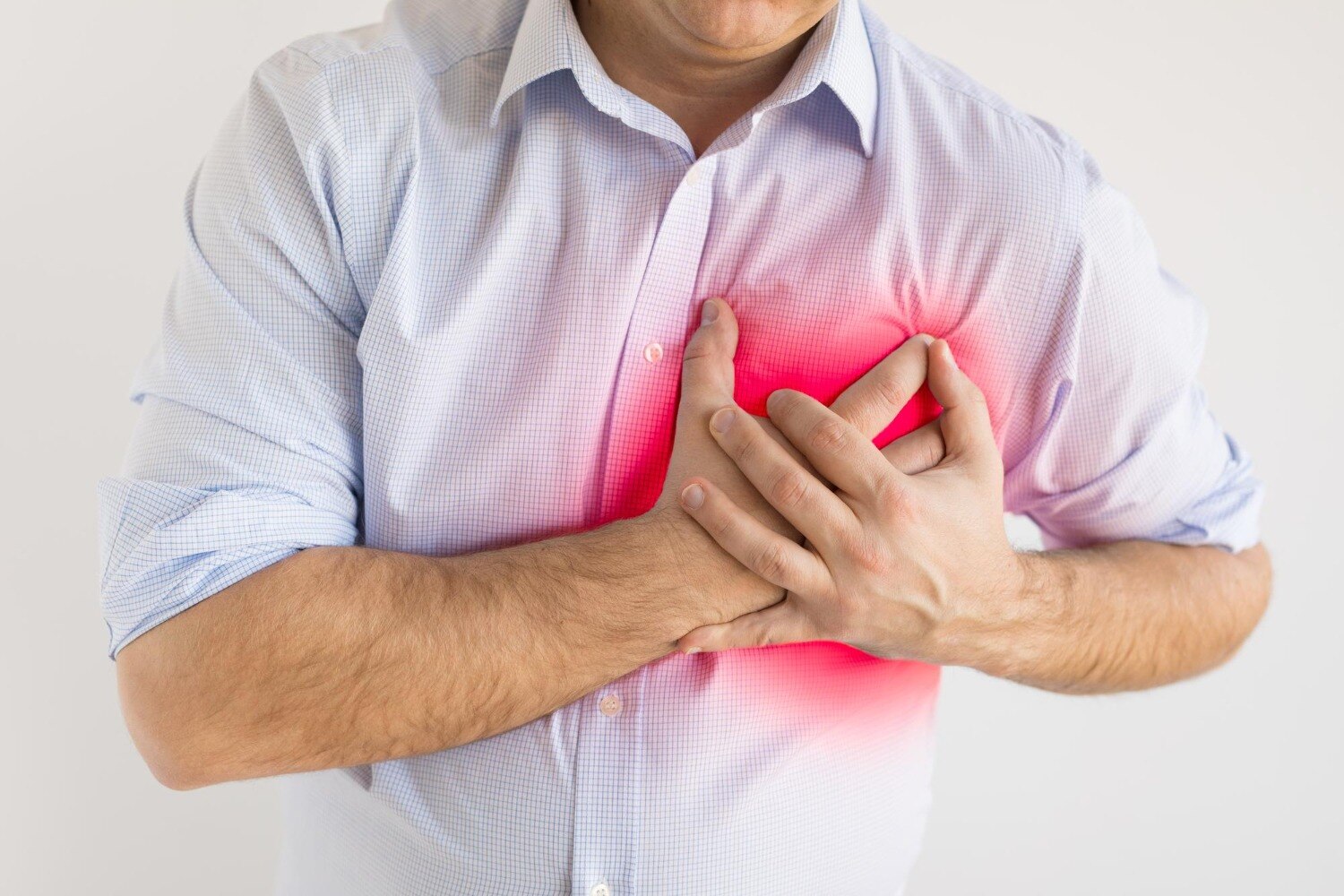
Burning, pressure, fullness, and upper-abdominal discomfort can come from reflux or reduced blood flow to the heart, and the sensations can overlap too closely for home diagnosis. You will learn which warning signs require emergency help, what information to record, and when a local cardiology consultation is appropriate instead of waiting or self-treating as acidity.
Key takeaways
- Treat pressure, squeezing, breathlessness, sweating, or faintness as an emergency.
- Do not use relief after antacids to rule out a heart problem.
- Women, older adults, and people with diabetes may have unusual symptoms.
- Call an ambulance when chest discomfort lasts several minutes or returns.
What differences suggest acidity, and what differences suggest cardiac discomfort?
Cardiac ischaemic discomfort often feels like pressure, squeezing, heaviness, fullness, or burning—not always severe pain. Reflux more often produces burning behind the breastbone, but the sensations overlap enough that no home symptom rule can safely exclude a heart problem.
| Feature | Cardiac discomfort | Acidity or reflux |
|---|---|---|
| Sensation | Pressure, squeezing, fullness, heaviness, or burning | Burning, irritation, or sour discomfort |
| Location | Centre or left chest, upper abdomen, back, jaw, shoulder, or either arm | Usually behind the breastbone or in the upper abdomen |
| Duration | Often lasts several minutes, returns, or follows exertion | Often follows meals and can recur with reflux |
| Triggers | Exercise, emotional strain, or exertion; it can also occur at rest | Eating, bending, lying down, or a large or fatty meal |
| Spread | May travel to an arm, shoulder, back, neck, jaw, or upper abdomen | Usually stays near the chest or throat |
| Associated signs | Breathlessness, sweating, nausea, faintness, or marked weakness | Sour taste, belching, or regurgitation |
| Response | Antacid or belching does not safely rule it out | Antacid relief supports reflux but does not prove it |
Meal timing, belching, temporary antacid relief, or tenderness when pressing the chest cannot safely exclude cardiac discomfort. Pain that changes with movement or is reproducible in one small area is more consistent with a chest-wall cause, yet your full history and risk profile still matter.
New, persistent, unexplained, or recurring symptoms need urgent assessment rather than self-selected Chest Pain Treatment in Pune.
Which chest-pain symptoms require an ambulance instead of a routine appointment?
Call 112 or your local ambulance service and go to an emergency department when chest discomfort is new, severe, persistent, unexplained, or keeps returning. Treat it as an emergency if it lasts more than a few minutes, even if it feels like acidity.
| Situation | What it may feel like | Action |
|---|---|---|
| Possible cardiac emergency | Pressure, squeezing, fullness, burning, indigestion, or mild upper-abdominal discomfort | Call 112; do not wait for a Chest Pain Consultation in Pune |
| High-risk associated symptoms | Breathlessness, sweating, nausea, fainting, marked weakness, or discomfort spreading to the arm, jaw, back, shoulder, neck, or upper abdomen | Use an ambulance and seek emergency assessment |
| Temporary improvement | Relief after belching, an antacid, rest, or a change in symptoms | Do not assume the heart is safe; cardiac discomfort can fluctuate |
Cardiac discomfort does not always cause dramatic central chest pain. Waiting for severe pain, or waiting to see whether an antacid works, can delay ECG and troponin testing.
While help is coming:
- Stop exertion and sit down.
- Note the time the discomfort began and whether it returns.
- Do not drive yourself; symptoms can worsen during the journey.
- Follow the dispatcher’s instructions.
- Take only medicine previously prescribed for this exact situation. Never use another person’s medicine.
Why can women, older adults, and people with diabetes have less obvious warning signs?
Do not wait for dramatic central chest pressure. Women, older adults, and people with diabetes can have a heart attack with mild pressure or no clear chest pain, so the urgency threshold must be lower when symptoms are new or unexplained.
| Group | Less obvious warning signs |
|---|---|
| Women | Breathlessness, unusual fatigue, nausea, sweating, back or jaw discomfort, faintness, or mild pressure |
| Older adults | Breathlessness, weakness, confusion, faintness, nausea, or discomfort in the back, jaw, or upper abdomen |
| People with diabetes | Breathlessness, sweating, nausea, unusual fatigue, faintness, or vague pressure without clear pain |
- Treat diabetes, high blood pressure, high cholesterol, smoking, obesity, chronic kidney disease, previous heart disease, older age, or a strong family history as reasons for earlier assessment.
- Do not label symptoms as acidity because they followed a meal, improved after belching, or eased temporarily after an antacid. Relief does not prove that the heart is uninvolved.
- Seek emergency care for new, exertional, worsening, persistent, recurring, or unexplained symptoms, especially with breathlessness, sweating, nausea, faintness, marked weakness, or discomfort spreading to the arm, back, neck, jaw, shoulder, or upper abdomen.
- A Chest Pain Doctor in Pune is appropriate for stable symptoms only after emergency warning signs have been excluded; waiting for severe pain or repeatedly treating episodes can delay lifesaving assessment.
What will a clinician check when the cause of chest discomfort is uncertain?
A clinician starts with your history, not a symptom label: onset, duration, exertion, meals, position, radiation, associated symptoms, previous heart disease, and risks such as diabetes, hypertension, smoking, high cholesterol, kidney disease, older age, or family history.
- They check blood pressure, pulse, breathing rate, oxygen saturation, temperature, and overall appearance. Abnormal vital signs can change the urgency immediately.
- They examine the heart, lungs, chest wall, abdomen, circulation, and signs of fluid overload. Tenderness can support a chest-wall cause but cannot safely exclude heart disease.
- In suspected acute coronary syndrome, they obtain and interpret a 12-lead ECG within 10 minutes of arrival. A normal or nondiagnostic first ECG does not end evaluation when symptoms or risk remain concerning; repeat ECGs may be needed.
- They use serial high-sensitivity troponin with symptoms, ECG findings, and clinical risk. A raised result indicates myocardial injury, not automatically a heart attack, and one result is not always enough.
| Test | What it records or shows | When it applies |
|---|---|---|
| 12-lead ECG | Electrical activity | Immediate suspected cardiac pain |
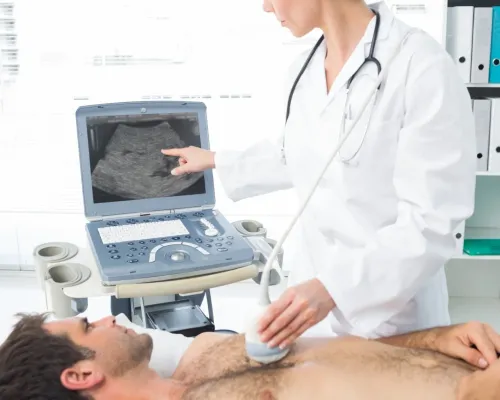
| Echocardiography | Heart structure and pumping | Suspected structural or function problems |
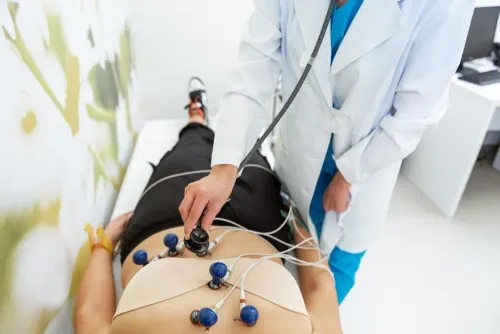
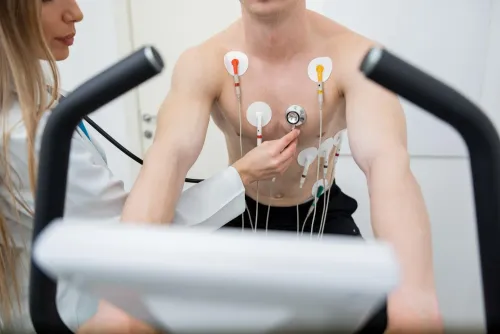
| Treadmill test | Response to exertion | Selected stable exertional symptoms |
| Holter monitor | Intermittent rhythm changes | Suspected episodic palpitations or faintness |
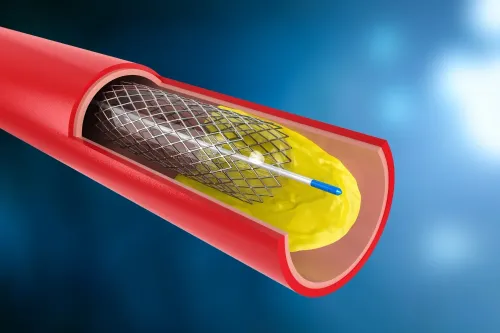
| Coronary angiography | Direct coronary-artery images | When invasive artery assessment is needed |
Treadmill testing and routine outpatient tests cannot replace emergency assessment during active or high-risk pain. Chest Pain Treatment in Pune depends on the cause: reflux care and cardiac treatment must not be interchanged. A Chest Pain Doctor in Pune should establish the diagnosis before recommending either.
When should you choose emergency care, same-day assessment, or a scheduled consultation?
Active or recurring chest discomfort with breathlessness, sweating, nausea, fainting, marked weakness, or spread to the arm, jaw, back, shoulder, neck, or upper abdomen belongs in an emergency department. Call 112 or local ambulance services, stop exertion, sit down, note the start time, avoid driving, and follow dispatch instructions.
Do not wait for an antacid or use someone else’s medicine.
| Care option | Choose it when | What happens next |
|---|---|---|
| Emergency department | Symptoms are active, severe, persistent, unexplained, or returning | Rapid triage, 12-lead ECG, serial high-sensitivity troponin, examination, and emergency treatment if indicated |
| Same-day assessment | New, unexplained, or recurrent discomfort has settled, especially with diabetes, hypertension, smoking, high cholesterol, kidney disease, known coronary disease, older age, or family history | A clinician reviews risk and decides whether urgent testing or referral is needed |
| Scheduled outpatient consultation | Symptoms are stable and urgent warning signs have been excluded | Cardiology review, ECG interpretation, medication reconciliation, and selective testing or follow-up |
For a stable concern, a Chest Pain Consultation in Pune can help determine whether you need exercise testing, coronary CT angiography, or no routine test. Record onset, duration, activity, meals, position, location, radiation, associated symptoms, and medicines taken; bring medication names and doses, previous ECG or scan reports, and relevant history.
The Heart Clinic - Dr. Satyajeet - 08048066834 in Aundh is an outpatient option for stable symptoms, not a substitute for emergency Chest Pain Treatment in Pune during active pain.
Related services
Coronary Angiogram A coronary angiogram is a diagnostic image, which uses dye and special X-rays to show the inside of your coronary (heart) arteries. View service → |
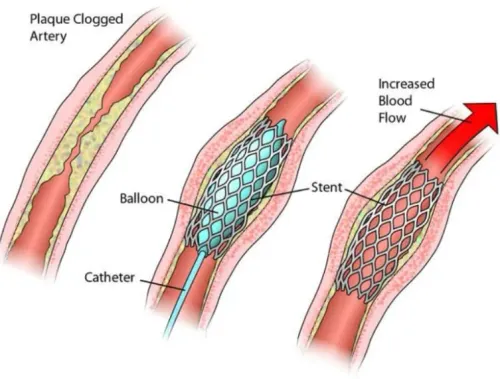
Coronary Angioplasty A coronary angioplasty is a procedure used to widen blocked or narrowed coronary arteries (the main blood vessels supplying the heart). View service → |
Frequently asked questions
How can you tell acidity from cardiac discomfort?
Acidity often causes burning behind the breastbone, sour fluid, or symptoms after meals. Cardiac discomfort can feel like pressure, squeezing, heaviness, fullness, or burning. Because these symptoms overlap, home symptom rules cannot safely exclude a heart problem.
Which chest-pain symptoms require an ambulance?
Call an ambulance for chest discomfort lasting several minutes or returning, especially with breathlessness, sweating, nausea, faintness, or discomfort spreading to the arm, back, neck, jaw, or shoulder. Do not drive yourself.
Why can heart warning signs be less obvious in some people?
Women, older adults, and people with diabetes can have breathlessness, unusual fatigue, nausea, sweating, dizziness, or faintness without severe chest pain. These symptoms still need urgent assessment when they are sudden or unexplained.
What does a clinician check when chest discomfort has an uncertain cause?
A clinician reviews the symptom pattern and risk factors, checks vital signs, and may order an electrocardiogram, blood tests such as troponin, and further testing based on the findings.
When should you choose emergency care, same-day assessment, or a scheduled consultation?
Choose emergency care for active or recurring warning symptoms. Arrange same-day assessment for new, unexplained, or persistent discomfort without severe warning signs. Schedule a consultation for recurring symptoms that have been evaluated and are stable.
Related service
TMT (Stress Test) TMT (Stress Test) in Aundh, Baner, Pune TMT is the abbreviation for Treadmill Test. The TMT Testing takes into account, the measurement of the blood circulation inside the body (blood... View service → |
Keywords