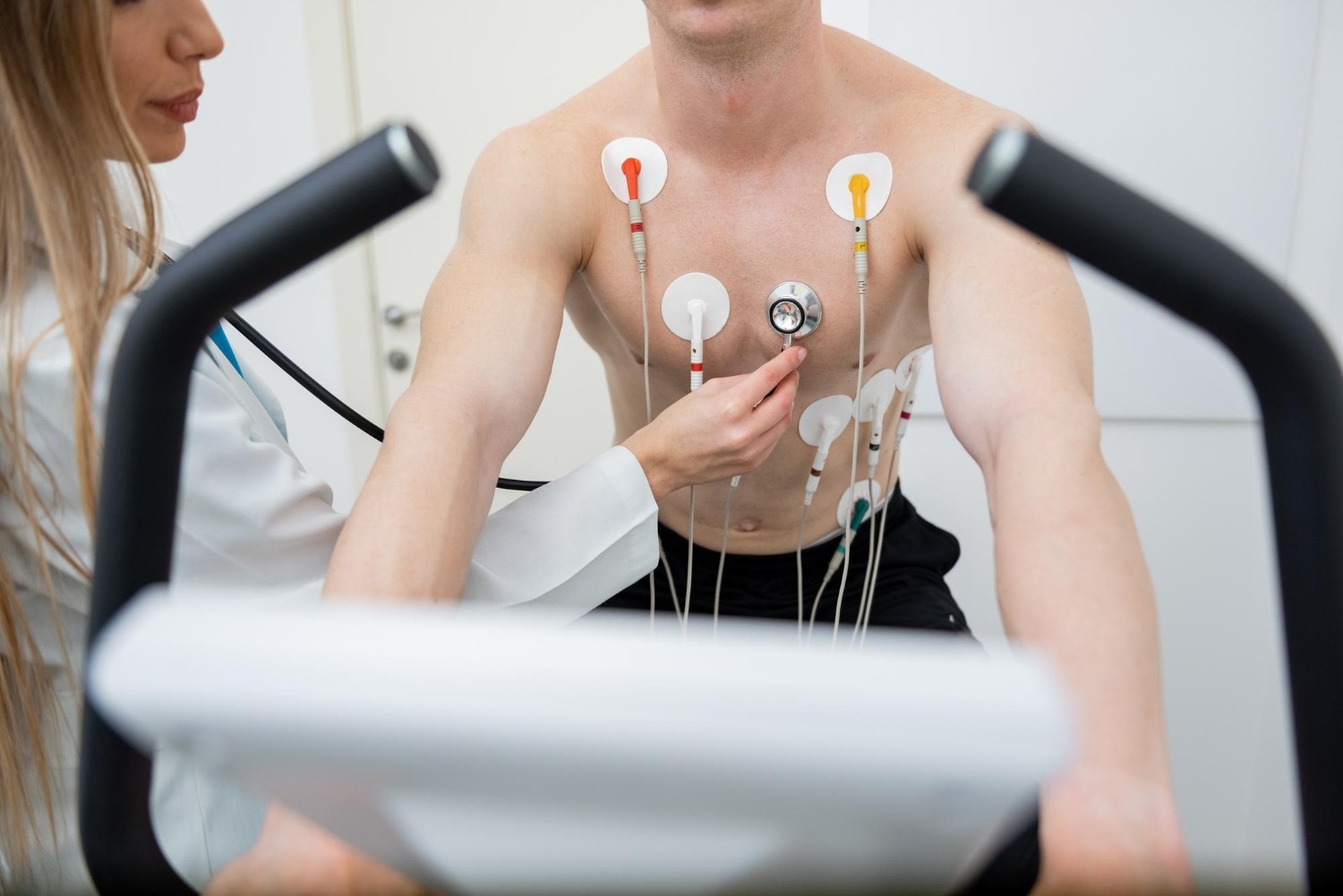
A treadmill stress test produces more than a yes-or-no answer: the clinician compares your ECG, symptoms, blood-pressure response, exercise workload and recovery. By understanding each stage, you can prepare safely, recognise an inconclusive result and ask whether an ECG-only test or stress imaging fits your cardiac question.
Key takeaways
- Do not stop heart medication unless the ordering clinician instructs you.
- Wear walking shoes and comfortable clothing; avoid a heavy meal before testing.
- A valid result combines ECG changes, symptoms, blood pressure and recovery.
- Choose stress echo or nuclear imaging when a treadmill ECG cannot answer the question.
What happens before, during and after the treadmill test?
A treadmill stress test starts with a medication review and safety check. Tell the clinician about prescribed drugs, heart symptoms, medical conditions and any previous exercise-test problem. Do not stop medication unless the ordering clinician gives specific instructions.
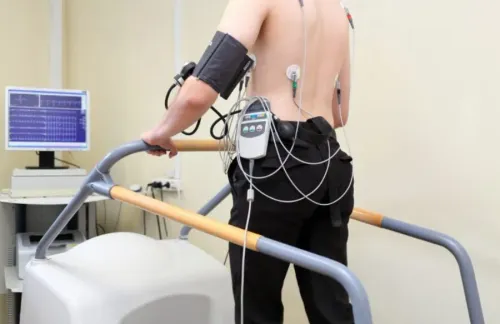
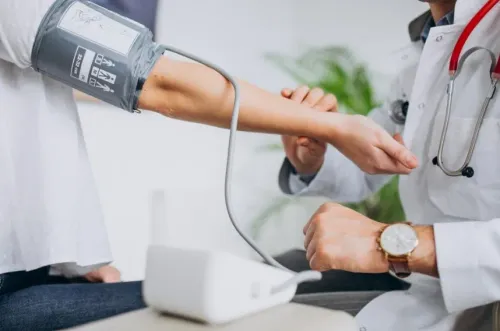
1. Staff attach 10 electrodes to your chest and limbs to produce a 12-lead ECG. They record your resting heart rate, blood pressure and baseline ECG before exercise begins.
2. You walk through staged treadmill workloads, usually with speed and incline increasing every few minutes. The clinician records exercise duration, workload in METs, heart rate, blood pressure, ECG changes and symptoms throughout the test.
3. Report chest pressure, unusual breathlessness, dizziness, faintness, leg pain or a racing heartbeat immediately. Do not try to finish the stage. The clinician can stop the test for these symptoms, falling systolic blood pressure, dangerous arrhythmias, marked ECG changes, severe breathlessness or your request.
4. After you stop, staff monitor your ECG, blood pressure, symptoms and recovery heart rate while you sit or walk slowly. The report should state why exercise ended, the achieved workload, exercise duration, ECG response and how quickly your heart rate recovered.
The protocol is adjusted when age, fitness, mobility, symptoms or joint problems make the standard workload unsuitable. During a Stress Test in Pune, ask how long monitoring continues after exercise and which medicines require instructions before the appointment.
How should you prepare, and how is the exercise protocol adjusted?
1. Before a Cardiac Stress Test in Pune, avoid a heavy meal beforehand, smoking and strenuous exercise immediately before the appointment. Ask the clinic whether you should avoid caffeine, including tea, coffee, energy drinks and some medicines containing caffeine.
2. Do not stop prescribed medicines on your own. Ask the ordering clinician specifically about beta-blockers, which can blunt the heart-rate response and are withheld for some tests but continued for others. Discuss every cardiac medicine before arriving.
3. If you use insulin or diabetes medicines, make a clear eating and dosing plan with the ordering clinician. Fasting or reduced food intake can cause hypoglycaemia, so bring your glucose meter and a fast-acting carbohydrate if your care team advises it. Wear loose clothing and secure walking shoes.
4. The standard Bruce protocol raises treadmill speed and incline in stages lasting roughly three minutes each. Each stage demands more effort; stopping before the final stage does not automatically make the test useless. The report should record your exercise duration and achieved workload, commonly in metabolic equivalents (METs).
5. A modified or tailored protocol may be safer and more informative if you are older, deconditioned, breathless, symptomatic or limited by arthritis, balance problems, muscle weakness or another orthopaedic issue.
The clinician may begin more slowly, use smaller workload increases or choose a different protocol so your heart is challenged without making walking ability the only obstacle.
When is the result adequate, inconclusive or unsafe to interpret?
Reaching the final Bruce stage is not the definition of success. A test is adequate when the achieved workload, usually reported in METs, exercise duration, symptoms, ECG and blood-pressure responses, and reason for stopping provide enough cardiovascular stress to answer the clinical question. A report that states only “positive” or “negative” is incomplete.
| Category | What it means | What the report should explain |
|---|---|---|
| Adequate | The workload and cardiovascular response addressed the question being asked. | Exercise duration, METs, peak heart rate, symptoms, ECG findings, blood pressure, recovery and stopping reason. |
| Inconclusive | The test ended before the heart was adequately stressed, so a normal tracing cannot exclude disease. | Failure to reach the target heart rate, medication-related chronotropic limitation, poor fitness, lung disease, anxiety, or leg and joint problems. This is not the same as a normal result. |
| Unsafe to continue | The risk of continuing outweighed further diagnostic value. | Falling systolic blood pressure, dangerous arrhythmias, marked ECG changes, severe breathlessness, faintness, concerning chest pain or your request to stop. |
Postpone an outpatient Heart Stress Test in Pune and obtain medical review for active or worsening chest pain. Acute myocardial infarction, unstable angina, decompensated heart failure and severe symptomatic aortic stenosis also require assessment before exercise testing; uncontrolled symptomatic arrhythmia, acute pulmonary embolism, myocarditis or pericarditis are further reasons to defer it.
How do clinicians interpret ECG, symptoms, blood pressure and recovery together?
A stress test is interpreted as a pattern, not a verdict from one ECG line. During a Stress Test in Pune, the clinician weighs:
- ST-segment depression, which can support exercise-related myocardial ischaemia but does not prove a blocked artery.
- Chest discomfort, breathlessness or dizziness, including when symptoms begin and whether they match ECG changes.
- A blood-pressure response that rises too little, falls during exercise or remains abnormal in recovery.
- Exercise-induced arrhythmias, whose type, timing and persistence affect risk assessment.
- Exercise capacity, recorded workload and duration; low capacity can carry information beyond the ECG.
- Chronotropic response, meaning how appropriately heart rate rises, and delayed heart-rate recovery after stopping.
ECG interpretation becomes difficult or falsely positive with baseline repolarisation abnormalities, left-ventricular hypertrophy, anaemia, electrolyte disturbance or digoxin use. Clinicians therefore compare the tracing with symptoms, workload and the starting ECG.
The result also depends on pre-test likelihood, age, sex, medical history, medicines and the reason for testing. A positive result supports further assessment, such as stress imaging or coronary CT angiography; it does not by itself diagnose obstructive coronary disease.
A normal result describes the workload achieved that day. It does not exclude chest pain from vasospasm, microvascular disease or non-cardiac causes, and it cannot guarantee protection from a future heart attack.
When should you choose a treadmill ECG, stress echo or nuclear stress test in Pashan?
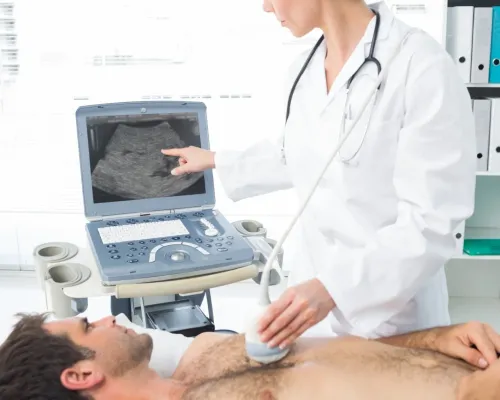
Choose a treadmill ECG when you can exercise, your resting ECG is interpretable, and the clinician is assessing possible stable coronary disease. It records electrical changes, symptoms, blood pressure and workload. A resting 2D echocardiogram is different: it uses ultrasound to show heart structure and motion at rest, not the heart’s response to exertion.
| Option | What it shows | When it fits |
|---|---|---|
| Treadmill ECG | ECG, symptoms, blood pressure and workload during exercise | Exercise-capable patients with an interpretable resting ECG |
| Stress echocardiography | Ultrasound changes in heart-muscle motion during stress | When stress imaging is needed without ionising radiation |
| Nuclear myocardial-perfusion test | Differences in blood flow to heart muscle during stress and rest | When perfusion information is important; it uses ionising radiation |
| Coronary CT angiography | CT images of the coronary arteries | An alternative when anatomical detail is more useful |
Ask about stress imaging or coronary CT angiography if the resting ECG shows left bundle-branch block, ventricular pacing, major left-ventricular hypertrophy with ST-T changes or digoxin-related changes. These findings can make a treadmill ECG difficult to interpret. An unclear, borderline or discordant treadmill result also needs a planned next step rather than an automatic diagnosis.
- Which modality is planned, and why?
- Will a cardiologist supervise it?
- Are continuous monitoring and emergency equipment available?
- Which medicines should you take or hold?
- Who explains the result and arranges follow-up?
When comparing a Heart Stress Test in Pune, confirm these details directly with The Heart Clinic - Dr. Satyajeet - 08048066834 rather than assuming every clinic offers the same test.
Related service
TMT (Stress Test) TMT (Stress Test) in Aundh, Baner, Pune TMT is the abbreviation for Treadmill Test. The TMT Testing takes into account, the measurement of the blood circulation inside the body (blood... View service → |
Frequently asked questions
What happens before, during and after a treadmill stress test?
Before testing, the clinician reviews your medicines, symptoms, medical history and previous exercise-test problems, then checks your resting ECG and blood pressure. During the test, you walk while speed and incline increase in stages, with continuous ECG and repeated blood-pressure checks. After exercise stops, monitoring continues during recovery until your heart rate, symptoms, ECG and blood pressure are stable.
How should you prepare for a treadmill stress test?
Follow the clinic’s instructions about food, drinks and medication. Do not stop prescribed medicines without approval from the ordering clinician. Wear comfortable clothing and walking shoes, and tell the team about chest pain, breathlessness, dizziness or a previous problem during exercise testing.
When is a treadmill stress-test result adequate, inconclusive or unsafe to interpret?
The clinician considers whether you exercised long enough and reached an adequate heart-rate response for the test’s purpose. A result is inconclusive when exercise ends early, the ECG is difficult to interpret or the heart-rate response is limited. Testing is stopped for warning signs such as significant chest pain, dangerous rhythm changes, severe breathlessness, a concerning blood-pressure response or marked dizziness.
When should you choose a treadmill ECG, stress echo or nuclear stress test?
A treadmill ECG suits people who can exercise safely and have a resting ECG that allows interpretation. Stress echocardiography adds ultrasound images to assess heart-wall motion and is useful when ECG findings alone will not answer the question. Nuclear stress testing uses blood-flow imaging and is considered when exercise capacity is limited or more detailed perfusion information is needed.
Keywords