A TMT is not automatically the right “heart check-up” for every person. Its value depends on your symptoms, cardiovascular risk, resting ECG, medicines and ability to exercise safely; by the end, you will know when it is useful, how to prepare and what the appointment involves.
Key takeaways
- TMT helps assess heart response to exercise when symptoms or findings raise a specific question.
- Do not undergo a TMT during acute chest pain, severe breathlessness, or certain unstable heart conditions.
- Avoid heavy meals, strenuous exercise, smoking, and caffeine before the appointment.
- Report chest pain, unusual breathlessness, dizziness, palpitations, or leg discomfort immediately.
When Does a Doctor Recommend a TMT?
A TMT is recommended when symptoms or clinical findings create a specific question about how your heart responds to exercise, not simply because you request a general check-up. The answer to “when is TMT recommended?” depends on your risk factors, resting ECG and ability to exercise—not age alone.
TMT indications commonly include:
- Exertional chest pain or pressure that raises concern for reduced blood flow to the heart.
- Unexplained breathlessness during activity, especially when walking uphill or climbing stairs.
- TMT for stable coronary artery disease when symptoms suggest a predictable, exercise-related pattern.
- TMT after abnormal ECG, when the resting tracing or examination needs further assessment. The baseline ECG may also determine whether stress imaging is more suitable.
- Palpitations, dizziness or unusual fatigue that occur during exercise and could reflect a rhythm problem.
- Assessment of exercise capacity or response after selected cardiac treatment, when the treating clinician needs objective follow-up.
TMT screening is different from diagnostic testing. Routine exercise ECG is not recommended for an asymptomatic, low-risk person because a false-positive result can lead to repeat scans, specialist procedures or invasive coronary angiography without clear benefit. Even at higher risk, the decision requires an individual assessment.
Symptoms, cardiovascular risk factors, the resting ECG and safe exercise ability matter more than age or a request for a “heart check-up.”
When Is a TMT Unsafe or the Wrong Test?
Active symptoms can make an elective treadmill test dangerous. Acute chest pain and TMT do not belong in the same appointment when pain occurs at rest, a suspected heart attack is possible, or symptoms suggest acute coronary syndrome. These are TMT contraindications requiring urgent clinical assessment, not exercise testing.
- Uncontrolled arrhythmia, especially a rapid or unstable rhythm
- Severe symptomatic aortic stenosis
- Decompensated heart failure, such as breathlessness at rest or sudden fluid retention
- Uncontrolled blood pressure, particularly severe hypertension
- Inability to walk safely without falling or stopping almost immediately
Search phrases such as “uncontrolled arrhythmiaTMT” and “severe aortic stenosisuncontrolled blood pressure” describe situations needing medical review, not a routine test. A TMT is useful only when you can exercise long enough and hard enough to produce a meaningful workload. Arthritis, neurological disease, severe deconditioning and mobility problems can prevent that.
TMT alternatives include a pharmacological stress test, which uses medicine to increase cardiac demand, or stress imaging. Stress echocardiography or nuclear perfusion imaging is often more suitable when the resting ECG has left-ventricular hypertrophy, conduction abnormalities, or other changes that obscure exercise-related ischemia.
Coronary CT angiography may be considered when the question requires anatomical information about the coronary arteries rather than an exercise response.
How Should You Prepare for the Appointment?
Instructions differ between testing centres, so confirm your TMT preparation with the laboratory and clinician rather than relying on a generic rule. Ask what to eat before TMT: many centres prefer a light meal and ask you to avoid a heavy meal for a specified period beforehand.
1. Follow the centre’s stated restriction period for caffeine before treadmill test, smoking before TMT, alcohol and vigorous exercise. These can affect heart rate, blood pressure, symptoms or your ability to exercise comfortably.
2. Ask about beta-blockers before TMT and other rate-limiting medicines. They can blunt the heart-rate response, but never stop them independently. Withholding a drug is appropriate only when the prescribing clinician instructs you to do so; continue medicines when the test is assessing treatment response or exercise safety.
3. For what to wear for TMT, choose loose clothing and comfortable walking shoes. Avoid restrictive garments, unstable footwear and clothing that makes ECG electrode placement difficult.
4. Bring an up-to-date medication list, prior ECGs and relevant cardiac records, including discharge summaries, angiography reports or echocardiogram results.
If your appointment is with The Heart Clinic - Dr. Satyajeet - 08048066834, confirm the centre’s fasting, medication and arrival instructions when booking; the correct plan depends on why your test is being performed.
Related service
TMT (Stress Test) TMT (Stress Test) in Aundh, Baner, Pune TMT is the abbreviation for Treadmill Test. The TMT Testing takes into account, the measurement of the blood circulation inside the body (blood... View service → |
What Happens During the TMT, and What Should You Report?
1. You give consent after the clinician explains the TMT procedure, its purpose, possible symptoms and your right to stop. The team then reviews your current symptoms, medical history, previous heart tests and medicines.
2. A baseline examination checks your pulse, blood pressure, heart sounds and ability to walk safely. Tell the team about any symptom present before exercise, including chest discomfort, breathlessness or dizziness.
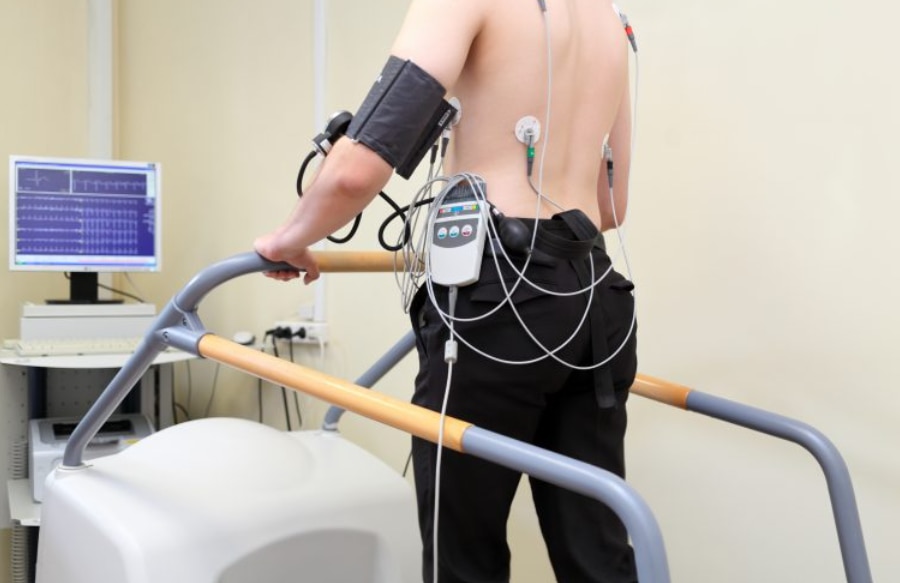
3. Staff place adhesive ECG electrodes on your chest, sometimes after cleaning or shaving small areas of skin. This ECG electrodes treadmill test setup connects to continuous rhythm monitoring.
4. Before walking, the team records a resting ECG and measures your blood pressure. These readings provide the comparison for exercise changes.
5. The treadmill starts at a low workload and rises in stages. A Bruce protocol TMT commonly increases treadmill speed and incline every three minutes; a modified protocol suits lower fitness, older age, symptoms or limited mobility. This is not a pass/fail fitness exam.
6. Faster breathing, sweating and tired legs are expected. Report chest pressure, unusual breathlessness, dizziness, palpitations, leg pain or sudden fatigue immediately; do not endure them to complete the test.
Staff can stop for TMT symptoms, including chest discomfort during TMT, dangerous rhythms, significant ECG changes, falling systolic pressure, severe hypertension, poor perfusion or technical problems.
7. After stopping, you remain connected while your heart rhythm and blood pressure return toward baseline. TMT recovery monitoring matters because abnormalities can appear after exercise ends. The report records exercise duration or workload, heart rate, symptoms, blood-pressure response, rhythm, ECG changes and why the test stopped.
A normal result means no concerning abnormality appeared under those test conditions; it does not guarantee that coronary disease is absent.
Frequently asked questions
When does a doctor recommend a TMT?
A doctor recommends a TMT when symptoms, risk factors, or an ECG create a question about how your heart responds to exercise.
When is a TMT unsafe or the wrong test?
A TMT is unsafe during acute or unstable heart problems and may be unsuitable if you cannot exercise safely or your resting ECG needs another type of assessment.
How should you prepare for a TMT appointment?
Wear comfortable walking shoes and loose clothing, avoid a heavy meal and strenuous exercise, and ask which medicines to take before testing.
What happens during a TMT?
Staff attach ECG electrodes, record your resting measurements, increase the treadmill workload in stages, and monitor your ECG, blood pressure, symptoms, and recovery.