
Blood pressure can vary with posture, stress, activity, illness and medication, so one reading rarely tells the full story. By following a consistent home routine, keeping a useful log and knowing when to seek advice, you can identify persistent hypertension and give a clinician better evidence for the next decision.
Key takeaways
- Use a validated upper-arm cuff fitted to your arm circumference.
- Rest quietly for five minutes before taking two readings one minute apart.
- Track readings at consistent times to reveal your usual blood-pressure pattern.
- Seek professional review for repeatedly high, very low, or alarming readings.
What a Blood Pressure Reading Actually Tells You
A blood-pressure result gives you two pressures, a pulse rate and a derived value called pulse pressure. Together, they describe the force in your arteries and the speed of your heartbeat at that moment.
- Systolic pressure is the first, higher number: the pressure when your heart contracts. In 138/86 mmHg, it is 138 mmHg.
- Diastolic pressure is the second number: the pressure between heartbeats, when the heart relaxes. In this example, it is 86 mmHg.
- Pulse rate is your heart rate, recorded in beats per minute. It is separate from the two blood-pressure numbers.
- Pulse pressure is systolic pressure minus diastolic pressure. For 138/86 mmHg, it is 52 mmHg.
A 138/86 mmHg result is not automatically “normal” or “hypertensive” under every guideline. The ACC/AHA standard classifies 130–139 systolic or 80–89 diastolic as stage 1 hypertension; NICE uses 140/90 mmHg as the usual clinic threshold for assessment.
One high result does not establish hypertension because blood pressure changes with activity, posture, pain, stress, illness, alcohol and some medicines. Record the date, time, pulse and circumstances, then compare repeated home or ambulatory readings. A pattern, rather than one number, supports diagnosis; regular checks also matter because high blood pressure often causes no symptoms.
How to Take an Accurate Blood Pressure Reading at Home
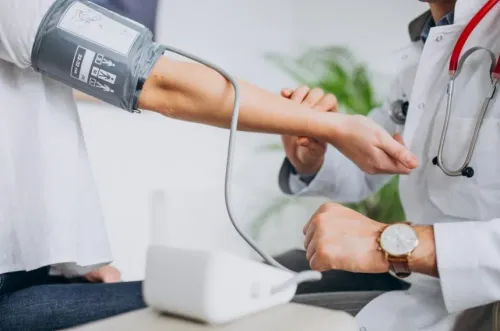
Use a validated upper-arm cuff for home measurement, not a finger device. Select the correct cuff size by matching its printed arm-circumference range to your upper arm; a cuff that is too small can produce a falsely high result, while one that is too large can read falsely low.
- Avoid caffeine, exercise and smoking for 30 minutes beforehand.
- Empty your bladder, then take a five-minute rest in silence.
- Sit with your back supported, both feet flat on the floor and legs uncrossed.
- Place the cuff on your bare upper arm, with its lower edge just above the elbow.
- Rest your arm on a table so the cuff and arm are at heart level.
- Do not talk, text or move during the measurement.
- Take two readings at least one minute apart and record both.
| Device choice | What it means | When it applies |
|---|---|---|
| Validated upper-arm cuff | Preferred home equipment with a supported accuracy record | Use for routine monitoring |
| Wrist monitor | Position-sensitive and less reliable than an upper-arm device | Use only when an upper-arm cuff cannot fit or is unsuitable |
| Finger monitor | Highly affected by temperature and placement | Avoid for clinical decisions |
Never measure over clothing or immediately after climbing stairs, eating, stress or a hot shower. Bring your monitor to a clinic periodically and compare it with the clinic’s equipment; a consistent difference can make an otherwise careful log misleading.
A Home-Monitoring Schedule That Shows Your Usual Pattern
Take morning and evening blood-pressure checks for at least four days, ideally seven. Each session requires two readings one minute apart. Measure in the morning before medication or breakfast and in the evening before bed, then discard day one and average the remaining readings.
Write each result in a four-day or seven-day blood-pressure log, including:
- Date and time
- Both blood-pressure readings
- Pulse rate
- Medication timing
- Symptoms, stress, exercise, caffeine or an illness that could affect the result
This record can reveal white-coat hypertension, where clinic pressure is high but home pressure is lower, and masked hypertension, where clinic pressure looks normal but home pressure is high. Either pattern can be missed when decisions rely on one clinic reading.
| Reading pattern | Your response |
|---|---|
| Isolated high reading below 180/120 mmHg | Sit quietly, repeat the measurement after one minute, and continue the schedule. Do not diagnose hypertension from one result. |
| Repeatedly elevated readings | Complete the log and arrange clinical review. A clinician can assess the average, confirm the diagnosis and discuss treatment. |
| Above 180/120 mmHg | Repeat after at least one minute. If it remains this high, seek urgent medical advice. Chest pain, shortness of breath, weakness or numbness, trouble speaking, confusion or vision change requires emergency care immediately. |
Which Blood-Pressure Test Answers Which Question?
A clinic blood-pressure measurement shows what your pressure is in a healthcare setting; home readings show your usual routine; ambulatory monitoring reveals changes across a full day; exercise testing shows how pressure responds to exertion.
| Test | Main question | Limitations and practical demands |
|---|---|---|
| Home monitoring | Is pressure repeatedly high outside the clinic? | Use a validated upper-arm monitor and record readings on several days. It can reveal white-coat hypertension or masked hypertension, but poor cuff fit, posture or technique can distort results. |
| Clinic blood-pressure measurement | What is the pressure during a standard appointment? | It is quick and widely available, but anxiety, pain or rushing can raise the result. An elevated office reading should be confirmed with home monitoring or 24-hour ambulatory blood-pressure monitoring before treatment when immediate intervention is not required. |
| 24-hour ambulatory blood-pressure monitoring | Does pressure stay high during ordinary activities, and what happens overnight? | A portable cuff takes repeated readings across daytime and sleep inflation intervals, exposing sustained, white-coat or masked patterns. Wearing it can disturb sleep and restrict the arm for a day. |
| Exercise blood-pressure testing | Does pressure rise appropriately during walking or cycling? | A supervised treadmill or bicycle test assesses the response to exertion and may support cardiovascular evaluation. It does not replace resting diagnosis, and it requires clinical supervision. |
Choose the test for the uncertainty you need to resolve, not simply the easiest reading to obtain. A specialist can compare all four patterns with symptoms, medicines and cardiovascular risk.
When Your Readings Need Professional Review
Arrange a clinical review when your averaged home readings remain elevated, or when clinic and home results disagree. ACC/AHA classifies 130–139 mmHg systolic or 80–89 mmHg diastolic as stage 1 hypertension; NICE generally begins clinic-based assessment at 140/90 mmHg. Neither threshold applies universally, so identify which standard your clinician uses.
Before starting treatment, ask for out-of-office confirmation with home or 24-hour ambulatory monitoring when there is no reason for immediate intervention. Request a home and clinic monitor comparison if your device gives results that do not fit the clinical picture.
- Book review for persistent elevation, repeated readings above 180/120 mmHg, or symptoms such as chest pain, breathlessness, weakness, confusion or severe headache; seek urgent care for the latter combination.
- Bring seven days of readings, medication names and doses, pulse values, symptoms, and notes about caffeine, exercise or illness.
- Discuss treatment when the average remains above your agreed target, not after one unusual result.
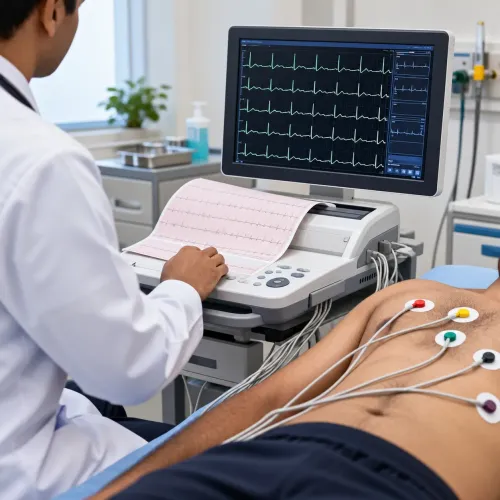
- Ask whether kidney tests, an electrocardiogram, ambulatory monitoring or other testing is needed.
The Heart Clinic - Dr. Satyajeet - 08048066834 can examine the pattern for white-coat or masked hypertension and relate it to your overall cardiovascular risk. That context matters: a 10-mmHg systolic reduction is associated with about 20% fewer major cardiovascular events, so the goal is meaningful systolic reduction, not simply a better-looking single reading.
Frequently asked questions
What does a blood-pressure reading tell you?
It shows systolic pressure, diastolic pressure, pulse rate, and pulse pressure at that moment.
How can you take an accurate blood-pressure reading at home?
Use a correctly fitted upper-arm cuff, rest for five minutes, keep your feet flat, support your arm, and take two readings one minute apart.
How often should you check your blood pressure at home?
Follow a consistent schedule with readings taken at similar times, then record the results to identify your usual pattern.
Which blood-pressure test should you use?
Home monitoring shows readings in daily life, clinic measurements assess pressure during an appointment, and ambulatory monitoring records results across day and night.
When should blood-pressure readings receive professional review?
Ask a clinician to review repeated abnormal readings, large differences between readings, or results accompanied by concerning symptoms.