A narrowed aortic valve can limit blood leaving the heart and cause breathlessness, chest pain, dizziness or fainting. By the end, you will understand how TAVR is planned and performed, when SAVR may be a better fit, what preparation and risks involve, and how to compare valve-care teams in Pune.
Key takeaways
- Report breathlessness, chest pain, fainting or reduced exercise tolerance promptly.
- TAVR uses imaging to guide a replacement valve through a catheter.
- The heart team weighs age, anatomy, surgical risk and long-term valve needs.
- Ask about recovery, warning signs, follow-up scans and future valve options.
How Aortic Stenosis Affects Heart Function and How TAVR Differs From SAVR
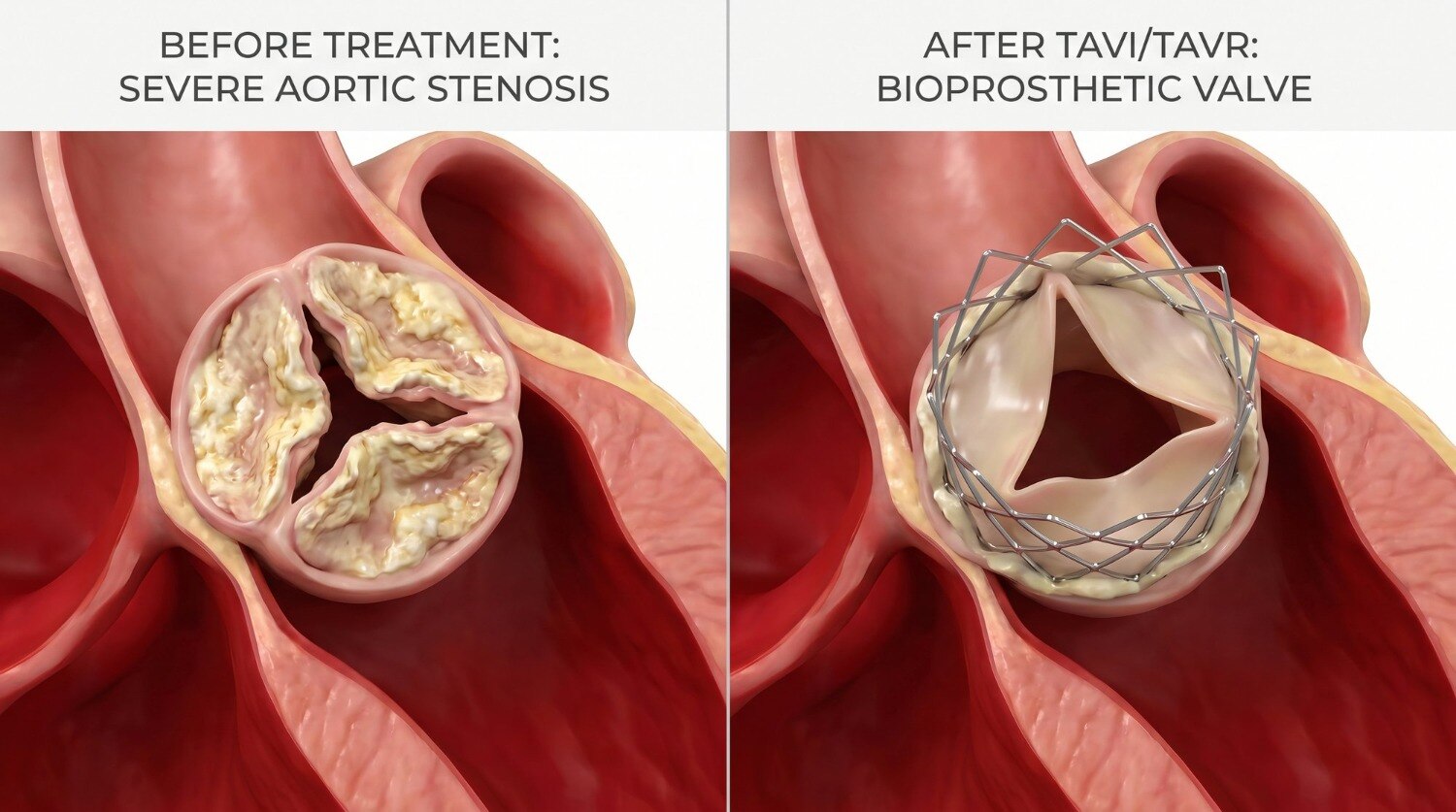
Aortic stenosis narrows the valve between the left ventricle and the aorta, so the heart must pump harder to push blood into the body. As the opening becomes severely restricted, the ventricle can thicken, weaken, and deliver less oxygen-rich blood during activity. Warning symptoms include:
- Breathlessness, especially while walking or climbing stairs
- Chest pain or pressure
- Dizziness
- Fainting
TAVR addresses severe aortic stenosis, particularly when symptoms or reduced left-ventricular function show that the narrowed valve is affecting circulation. It is not a universal treatment for every aortic-valve disorder; isolated aortic regurgitation can be harder to treat because a replacement valve may lack calcium for secure anchoring.
| Option | Access and valve placement | Main distinction |
|---|---|---|
| TAVR or TAVI | A catheter carries a folded replacement valve through the femoral artery or another route and deploys it inside the diseased valve. | TAVR and TAVI describe the same catheter-based treatment. |
| SAVR | A surgeon opens the chest, removes the native valve, and sews in a replacement valve. | It is open-heart surgery with a larger incision and surgical recovery. |
Choosing between them depends on anatomy, surgical risk, life expectancy, valve durability, future coronary access, and your preferences—not age alone. A multidisciplinary heart-team assessment matters. A search for TAVR Surgery in Pune is only a starting point; ask how the team compares both options for your lifetime care.
What Happens During TAVR, From Imaging to Valve Deployment
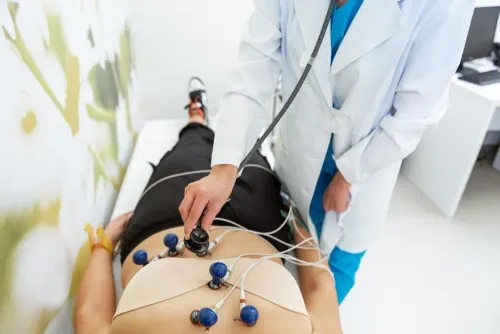
Transthoracic echocardiography confirms how severe the stenosis is, measures left-ventricular function, and shows whether other valve problems affect symptoms. ECG-gated CT angiography then measures the aortic annulus, leaflet and coronary anatomy, and iliofemoral arteries to select the valve size and safest access route. Transesophageal echocardiography may add detail when standard images are unclear.
Blood tests, kidney function, coronary assessment and an anaesthesia review complete the safety check.
| Test | What it determines | Why it matters |
|---|---|---|
| Echocardiogram | Valve severity and ventricular function | Confirms the target for treatment |
| ECG-gated CT | Annulus, coronary height, root and access vessels | Prevents incorrect sizing, coronary obstruction and unsafe access |
| Coronary assessment | Significant blocked arteries | Identifies disease needing treatment or planning |
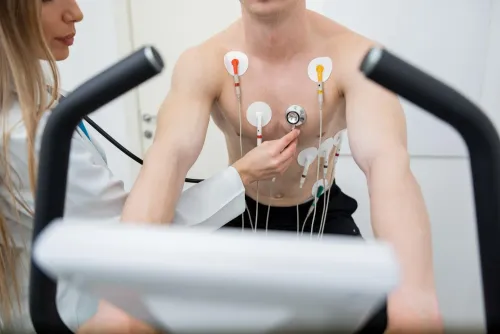
| ECG and monitoring | Conduction abnormalities, including right bundle-branch block | Estimates permanent-pacemaker risk |
| Blood tests and anaesthesia review | Kidney function, blood counts and procedural fitness | Guides contrast use, bleeding precautions and sedation |
- The team obtains arterial access, usually through the femoral artery; another route is chosen when those vessels are too narrow, diseased or tortuous.
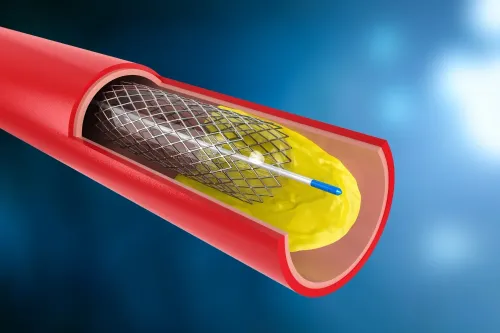
- A catheter carries the folded replacement valve into the aortic root. Imaging positions it inside the diseased native valve before deployment.
- The team checks valve seating, pressure gradients, coronary flow and residual paravalvular leak. It also watches for bleeding, stroke, vessel injury and conduction changes.
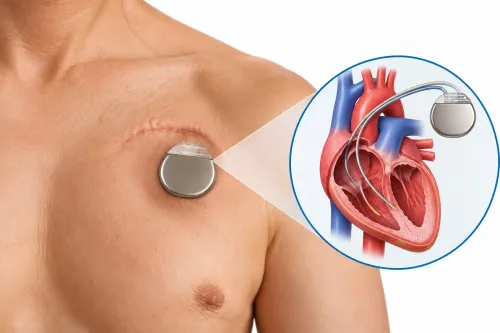
- Ask a TAVR Hospital in Pune how it monitors conduction abnormalities before discharge and arranges follow-up, especially with right bundle-branch block, deep implantation or high pacemaker risk.
How the Heart Team Decides Between TAVR and SAVR
A heart team—not age alone—decides between TAVR and surgical aortic-valve replacement. The team weighs symptoms, frailty, life expectancy, surgical risk, valve anatomy, expected durability, future coronary access and your preference. A TAVR Cardiologist in Pune should review these factors with a cardiac surgeon, imaging specialist and anaesthesia team.
| Option | Factors that support it | Questions or risks to assess |
|---|---|---|
| TAVR | Older age, higher surgical risk, frailty, or suitable transfemoral access with anatomy that supports secure valve placement | CT findings, femoral-vessel disease, coronary access after implantation, pacemaker risk, kidney function and lifelong valve planning |
| Extra assessment | Younger or low-risk patients, bicuspid valve, small aortic root, uncertain life expectancy, or conflicting test results | Compare durability, future valve-in-valve treatment, coronary re-access, gradients, reintervention and personal priorities |
| SAVR | Need for bypass surgery, ascending-aorta repair or another valve operation; unsuitable arteries; bicuspid disease with aortopathy; or anatomy that makes TAVR unsafe | Recovery burden, bleeding, stroke, kidney injury, surgical risk and the type and lifetime plan for the replacement valve |
Transfemoral TAVR can offer faster early recovery, but “minimally invasive” does not mean risk-free. A difficult access route, severe breathing disease, complex anatomy or the need for open correction can require general anaesthesia, an alternative access route or SAVR.
Ask how the team will manage residual leak, valve malposition, stroke, vascular injury and conduction problems. Pre-existing right bundle-branch block, deep implantation and membranous-septum anatomy increase concern about permanent pacemaker placement.
TAVR Preparation, Recovery, Complications and Long-Term Valve Planning
Before TAVR, give the team your complete medication list, allergies, prior operations, dental infection history and any bleeding or kidney problems. Complete the requested blood tests, CT or echocardiography, anaesthesia review and coronary assessment. Ask which medicines to stop, when to fast, and who will manage transport and medicines after discharge.
- Confirm the access route and planned valve.
- Ask how the team will prevent and detect bleeding, vascular injury, stroke and kidney injury.
- Ask how it monitors conduction abnormalities before discharge and after the procedure, especially with right bundle-branch block, deep implantation or a short membranous septum.
- Confirm the emergency contact number and first follow-up appointment.
Compare the trade-offs, not just the hospital stay. A TAVR Surgery in Pune provider should explain how age, anatomy, valve durability, future valve-in-valve treatment and surgical backup affect your lifetime plan.
| Option | Main advantages | Main trade-offs |
|---|---|---|
| TAVR | Catheter-based treatment, often faster mobility and a selected uncomplicated discharge in one to two days | Vascular bleeding, stroke, pacemaker need, paravalvular leak and uncertain lifetime reintervention planning |
| SAVR | Direct valve surgery and established long-term durability data; permits additional surgical repair | Chest incision, longer recovery, bleeding, infection, kidney injury and risks from cardiopulmonary bypass |
After discharge, take single antiplatelet therapy when appropriate; atrial fibrillation, venous thromboembolism or another indication may require anticoagulation instead. Attend clinical review and echocardiography around 30 days, then at least annually. Seek urgent advice for breathlessness, chest pain, fainting, fever, weakness, speech trouble or declining exercise tolerance.
Ask a TAVR hospital in Pune for its pacemaker and lifelong valve-surveillance plan.
How to Compare a TAVR Care Team in Baner and Pune
Choose a center whose TAVR service can manage the entire pathway, not just valve deployment. A TAVR Hospital in Pune should provide a multidisciplinary valve team, cardiac-surgical backup, CT and echocardiography expertise, intensive-care support, and emergency pathways for stroke and femoral-vessel injury. “TAVR” in a listing is not a quality accreditation.
Ask the center and clinician to confirm:
- Who reviews your CT angiogram, echocardiogram, coronary anatomy, kidney function, and surgical risk.
- How the TAVR Cardiologist in Pune discusses valve durability, future coronary access, and TAVR versus SAVR with you.
- How the team monitors conduction problems, especially with right bundle-branch block, and manages pacemaker implantation if required.
- Which results it reports, including stroke, bleeding, vascular injury, kidney injury, residual leak, pacemaker rates, and mortality.
- Who performs follow-up echocardiography around 30 days and at least annually, with earlier review for breathlessness, fainting, chest pain, fever, or neurological symptoms.
- How antiplatelet or anticoagulant treatment is chosen for your conditions rather than copied from another patient.
Check the difference between the center’s promises and its evidence:
| Evidence to check | Strong sign | Warning sign |
|---|---|---|
| Team structure | Named valve team and surgeon backup | One clinician makes every decision |
| Aftercare | Written surveillance and pacemaker plan | Discharge ends the discussion |
| Transparency | Complication and outcome data | Only “advanced” claims |
The Heart Clinic - Dr. Satyajeet - 08048066834 can provide a cardiology review of reports and help identify questions for the treating valve team.
Frequently asked questions
How does aortic stenosis affect heart function?
A narrowed aortic valve makes the left ventricle pump harder. Over time, the ventricle can thicken or weaken, reducing blood flow during activity.
How does TAVR differ from SAVR?
TAVR places a replacement valve through a catheter, while SAVR replaces the valve during open-heart surgery. Suitability depends on anatomy, surgical risk and long-term planning.
What happens during a TAVR procedure?
The care team uses heart imaging to assess the valve and access route, advances a catheter to the aortic valve, and deploys the replacement valve under imaging guidance.
How do doctors choose between TAVR and SAVR?
A multidisciplinary heart team reviews symptoms, valve anatomy, access vessels, age, surgical risk, other conditions and the need for future interventions.
What should patients ask before choosing a TAVR care team in Pune?
Ask about heart-team assessment, imaging facilities, emergency support, operator experience, discharge planning, complication management and scheduled long-term valve follow-up.
Keywords