Choosing between a stress test, CT coronary angiography and invasive catheter angiography depends on your symptoms, ECG, kidney function, heart rhythm and the likelihood that treatment will be needed during the same visit. By preparing your records and medicines in advance, you can understand why a test was selected, what happens on the day and how the result shapes treatment planning.
Key takeaways
- Start with an ECG after clinical assessment; it does not show every coronary narrowing.
- Ask whether CT coronary angiography or invasive angiography fits your symptoms and clinical risk.
- Bring medication details, allergy history, kidney reports and prior cardiac records.
- Use angiography findings with symptoms and risk factors, not as an isolated treatment decision.
Which cardiac test should come first: ECG, stress test, CT or invasive angiography?
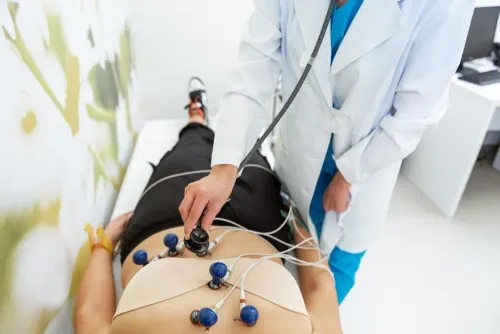
An ECG is usually the quickest starting test. It can reveal an abnormal rhythm, signs of a previous heart injury or reduced blood supply, but it cannot show every coronary narrowing. For stable chest pain without known coronary artery disease, CT coronary angiography may be the first detailed coronary test after clinical assessment.
| Test | What it evaluates | When it is chosen |
|---|---|---|
| ECG | Rhythm, prior injury and electrical signs of reduced blood supply | Usually at the initial assessment |
| Echocardiogram | Pumping strength, valves and chamber function | When structural or functional disease is suspected |
| Stress test | Symptoms, ECG or heart-function changes during exertion | When resting tests do not answer the question |
| CT coronary angiography | Coronary anatomy using ECG-gated X-ray images and iodinated contrast | Stable symptoms when a detailed, non-invasive coronary assessment is suitable |
| Invasive catheter angiography | Coronary arteries through a wrist or groin catheter | High-risk findings, inconclusive or unsuitable non-invasive testing, or likely immediate treatment |
The comparison called coronary angiogram versus CT angiography is not simply invasive versus non-invasive. CT avoids an arterial catheter but image quality can fall with a fast or irregular rhythm, heavy calcium, existing stents, motion or an incomplete breath-hold.
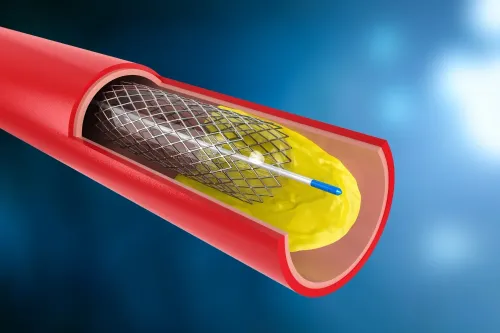
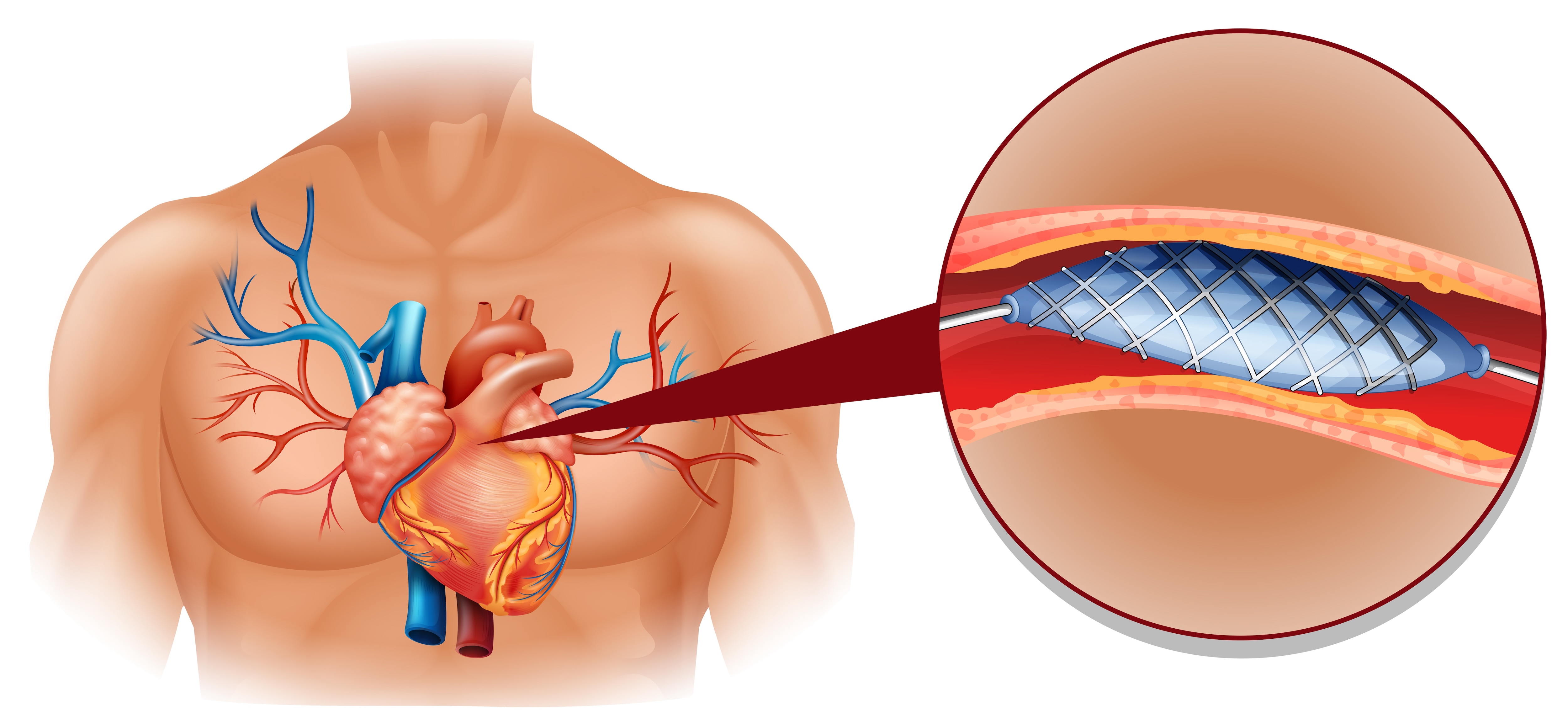
Invasive or CT coronary angiography both use contrast and X-rays; invasive angiography can proceed directly to balloon treatment or stent placement when appropriate.
Ask:
- Which test is being offered, and why?
- What result would require the next test?
- Is invasive angiography needed because treatment could happen immediately?
How should you prepare for angiography and what should you bring to Pune?
Confirm fasting instructions with the ordering team; there is no single rule. CT coronary angiography, catheter angiography, sedation and a possible intervention can require different fasting periods. Do not stop aspirin, warfarin, apixaban, clopidogrel, diabetes medicines or metformin unless the cardiology or radiology team gives drug-specific instructions.
Tell the team about kidney disease or dialysis, diabetes, asthma, thyroid disease, bleeding disorders, allergies, every prescription and supplement, and any previous reaction to iodinated contrast. Report pregnancy or possible pregnancy before either X-ray-based test.
They may request serum creatinine and estimated glomerular filtration rate, plus blood counts or clotting tests when bleeding risk or an intervention is being considered. Take prescribed heart-rate-control medicine for CT only as directed.
- Bring previous ECGs, echocardiograms, stress-test reports, CT scans, discharge summaries and angiography reports.
- Carry a written medication list with doses, kidney reports and dialysis details.
- Record any contrast reaction’s name, date and symptoms.
- Arrange an escort or transport home after invasive angiography, then ask about driving, work and strenuous activity.
| Test | Preparation and practical point | What to confirm |
|---|---|---|
| CT coronary angiography | Fasting and heart-rate control vary by protocol | ECG-gated scanning, kidney checks and contrast precautions |
| Catheter angiography | Fasting, escort and activity limits may apply | Access-site care, discharge timing and intervention plans |
These records prevent duplicate testing and help the cardiologist compare new images with earlier findings when choosing a coronary angiogram or CT angiography in Pune.
What happens during invasive angiography and CT coronary angiography?
1. Invasive coronary angiography begins with consent, an IV line, cleaning of the access site and injection of local anaesthetic. The operator passes a catheter into an artery, usually the radial artery in your wrist or the femoral artery in your groin.
2. The operator injects iodinated contrast through the catheter while X-ray fluoroscopy records several views of your coronary arteries. After imaging, the catheter is removed and the wrist or groin is compressed with a band or closure device.
3. Staff observe you while checking the puncture site, pulse and vital signs. Same-day discharge is common after an uncomplicated diagnostic study; overnight monitoring is needed in some cases or when balloon treatment or stent placement is performed.
4. CT coronary angiography uses an IV line rather than an arterial catheter. The scanner synchronises image capture with your ECG, and prescribed heart-rate-control medicine helps reduce motion. You hold your breath briefly while iodinated contrast is injected; scanning finishes within minutes, but preparation and observation take longer.
5. The practical difference in coronary angiogram versus CT angiography is that CT provides diagnosis without arterial access, while invasive angiography can proceed directly to treatment. A very fast or irregular rhythm, motion or an incomplete breath-hold can make CT images non-diagnostic, leading to another test or invasive angiography.
CT cannot place a stent during the scan.
How are risks, scan findings and treatment decisions interpreted?
A 70% narrowing is not, by itself, a decision for a stent. The cardiologist combines symptoms, ECG, heart-pumping function, kidney function, bleeding risk, lesion location and whether the narrowing can be treated safely.
An intermediate lesion may need fractional flow reserve (FFR) or instantaneous wave-free ratio (iFR) during invasive assessment. FFR of 0.80 or lower or iFR of 0.89 or lower suggests that the lesion limits blood flow and may support revascularisation.
- After an abnormal ECG, stress test or CT, the next step may be medicines, functional testing, invasive angiography, PCI or coronary artery bypass surgery. Invasive angiography is not automatic.
- A coronary angiogram versus CT angiography carries different procedure risks, but both use iodinated contrast and radiation. Assess kidney function and previous contrast reactions beforehand.
- Invasive angiography can cause bruising, bleeding, a growing groin lump, wrist swelling, arterial injury or, rarely, impaired circulation. CT can be non-diagnostic because of heavy calcium, stents, motion, an irregular rhythm or poor breath-holding.
- Seek urgent help for persistent bleeding, fainting, severe pain, a cold or numb limb, chest pain or breathlessness after invasive testing.
- CT may show plaque without major narrowing. That usually shifts attention to LDL cholesterol, blood pressure, smoking, diabetes, exercise and weight rather than a stent.
- A normal or non-obstructive CT does not exclude microvascular disease, spasm, valve disease, arrhythmia, lung disease, reflux or muscle pain. Persistent symptoms need follow-up.
How do you choose a Pune centre for the test and the next treatment step?
Before booking a coronary angiogram or CT angiography in Pune, verify which test the appointment covers: CT coronary angiography or catheter-based coronary angiography. They are not interchangeable.
| Option | What happens | Confirm before booking |
|---|---|---|
| CT coronary angiography | ECG-gated cardiac CT with IV contrast; no arterial catheter or immediate stent treatment | Coronary-image expertise, heart-rate assessment, breath-hold guidance, kidney-function screening and a written contrast-reaction protocol |
| Catheter angiography | Radial or femoral arterial access, X-ray imaging and possible PCI during the same procedure | Operator’s credentials, both access options, observation arrangements and emergency support |
Ask these questions:
- If a critical lesion appears, can the centre coordinate PCI or an urgent cardiac-surgery referral?
- Who explains plaque, calcium, image quality and the report’s recommendation for FFR, iFR, medicines or another scan?
- When will that explanation happen, and will you receive the report and plan in writing?
- For invasive testing, what does same-day observation involve, and what emergency pathway applies after discharge?
Bring previous ECGs, echocardiograms, stress-test reports, scans, discharge summaries and a medicine list. Request written instructions for the puncture site, medicines, hydration, driving and warning symptoms.
The Heart Clinic - Dr. Satyajeet - 08048066834 is one Pune option for discussing whether your full clinical picture supports ECG, echocardiography, stress testing, CT or invasive angiography; a test label alone does not determine suitability.
Related services
Coronary Angiogram A coronary angiogram is a diagnostic image, which uses dye and special X-rays to show the inside of your coronary (heart) arteries. View service → |
Angioplasty and Stent placement Angioplasty and Stent placement Angioplasty and stent placement are common procedures to open arteries in the heart that are clogged. View service → |
Frequently asked questions
Which cardiac test should come first: ECG, stress test, CT or invasive angiography?
An ECG is usually the quickest starting test. After clinical assessment, a stress test or CT coronary angiography may suit stable chest pain, while invasive angiography is used when direct coronary imaging or treatment planning is needed.
How should you prepare for angiography and what should you bring to Pune?
Follow the centre’s fasting and medication instructions. Bring your prescription list, allergy history, kidney-function reports, previous ECGs or scans, referral notes and identification documents. Tell the team about diabetes, kidney disease, pregnancy possibility and blood thinners.
What happens during invasive angiography and CT coronary angiography?
Invasive angiography uses a catheter inserted through an artery to inject contrast and take X-ray images. CT coronary angiography uses an intravenous contrast injection and a CT scanner; heart-rate control and breath-holding help produce clearer images.
How are angiography findings used to choose treatment?
A cardiologist combines the scan with symptoms, ECG findings, heart function, medical history and risk factors. The result may support medication and monitoring, stenting or bypass surgery; a narrowing alone does not determine the treatment.
How do you choose a Pune centre for angiography and the next treatment step?
Choose a centre that provides the recommended test, explains contrast and kidney-related precautions, shares a written report and images, and offers cardiology follow-up to interpret findings and plan treatment.
Related service
Coronary Angioplasty A coronary angioplasty is a procedure used to widen blocked or narrowed coronary arteries (the main blood vessels supplying the heart). View service → |
Keywords